Brief Reviews: Legacy Horn Experience

It’s been a while since I posted anything here, but I recently received three excellent publications for review from Legacy Horn Experience, https://www.legacyhornexperience.com/. LHE was created by Steve Lewis, who, as he mentions on the About page, is not “the” Steve Lewis of S.W. Lewis Horns. Rather, this company sells a variety of horn-related items including music and mouthpieces:

We are proud to offer new editions by Martin Hackleman and David Jolley. Other publications offered include those by Vitaly Buyanovsky, Daniel Bourgue, Eli Epstein, Frøydis Ree Wekre, Andrew Lewinter, and John Barrows.  Additionally we publish Wendell Hoss’s 9 Studies which have been out-of-print for decades.

We are also pleased to offer the most commonly used of the Moosewood and L’Olifant mouthpiece cups and rims.

https://www.legacyhornexperience.com/about

Additionally, they plan to offer a “Legacy” line of mouthpieces, including “recreations of Reynolds and King mouthpieces with the benefit of CNC technology.”

This post will briefly review three new LHE publications:

  • Vitaly Bujanovsky –  Sonata for Solo Horn No. 1, edited by Martin Hackleman
  • Frédéric Chopin – 6 Studies for solo horn, adapted by Steve Lewis and edited by Martin Hackleman
  • Richard Strauss – Till Eulenspiegels lustige Streiche, Op. 28, Arranged for trumpet, horn, and trombone by David Jolley

As a composer, Vitaly Bujanovsky (1928-1993) is most well-known for his Four Improvisations (from traveling impressions) for Solo Horn, but he has some other substantial works with horn as well. This edition of his Sonata No. 1 includes “descriptive text and instructions” by Martin Hackleman, which could be very useful to both performers and teachers looking to craft a convincing interpretation of this unaccompanied work. For example, the first movement, Moderato espressivo, includes the editorial phrase “The curtain opens as our hero strolls peacefully through the forest.” The other three movements contain helpful phrases along the same lines. The engraving is clear and easy to read, and the piece is available for download directly from the LHE website. There are a few discrepancies between this version and a recording I found on YouTube by Dmytro Taran.

These discrepancies are presumably the result of this new edition, but I am not entirely sure. Also included is a brief article by Hackleman, “Playing Together But Not at the Same Time,” in which he describes a creative way for two players (teacher and student, perhaps) to work on phrasing and musical effect in a single solo piece. The article is followed by an annotated version of Buyanovsky’s Sonata designed to be practiced collaboratively in this manner. The price ($10 as of this writing) makes this publication an excellent value and well worth adding to your library.

Frédéric Chopin is renowned as a composer of works with piano, and his gift for idiomatic melodies on that instrument is enough to make even a horn player jealous! If you’ve ever wanted to play some of Chopin’s most well-known melodies on the horn, while also working on flexibility, endurance, phrasing, and other fundamentals, this collection of 6 Studies for solo horn is for you. It includes horn-only versions of the following:

  • Mazurka in F Minor, Op. 7, No. 3
  • Prelude Op. 28, No. 6
  • Prelude Op. 28, No. 15 (The “Raindrop” prelude)
  • Polonaise in B-flat Major
  • from Fantasie-Impromptu No. 4, Op. 66
  • “Largo” from Cello Sonata, Op. 65

These adaptations work quite well on the horn, while retaining the essential character of the original compositions. The range and rhythmic requirements are well within the abilities of an intermediate to advanced player, but achieving the appropriate style and overall effect could prove challenging. My favorite so far is the “Largo” from the Cello Sonata, and I’m looking forward to spending more time with these pieces.

Last in this collection of reviews is a brass trio version of Strauss’s famous tone poem, Till Eulenspiegel. David Jolley’s arrangement is in the original key and requires virtuosic technique from all three players. This arrangement is as close to the original as you can get with only three voices, but it is relentless! Most of the major horn excerpts are included, but there’s so much more: violin parts, clarinet parts, etc. Jolley does a great job of spreading these additional passages around the ensemble, but as there are only three voices everyone is playing most of the time during this nearly 10-minute tour de force. Jolley’s recording with the New York Brass Arts Trio proves that it is playable, and musically at that!

Having played in a brass trio for several years, I know how difficult it can be artistically and technically. With this arrangement and others, David Jolley continues to push the boundaries of what is possible on the horn and for the brass trio. Despite the difficulty, it’s a fantastic arrangement with lots of potential for live performances. Portions of the entire work could be excerpted and included on a lecture recital, for instance. At $15 for the score and parts, it’s a great value.
Brief Reviews: The French Horn Warmup Collection and Dueling Fundamentals for Two Horns

In my last post of 2019 I want to recommend two excellent new publications for horn players, John Ericson’s The French Horn Warmup Collection and Matthew Haislip’s Dueling Fundamentals for Two Horns. Either or both would make great gifts if you are still looking for a last minute holiday present for a horn-playing family member or friend.

The French Horn Warmup Collection includes material from several earlier publications by Dr. Ericson, as well as some new exercises. They can be freely combined in various ways to create numerous warmup and practice routines. All of the basics are covered thoroughly, including range and tone development, flexibility, scales and arpeggios, intonation, breathing, multiple tonguing, and more. I regularly use the exercises for breathing and multiple tonguing, and the “breath-set-play” pattern found at the end of the “Short Daily Routine.” Everything is notated very clearly, and the exercises are explained and presented in a logical manner. The Kindle edition is listed for $3.99, which is an amazingly low price for the amount and quality of the content in this collection. It can be easily read and performed from by using a tablet equipped with the Kindle app. If you prefer a hard copy, it is available through print-on-demand for $8.99, which is also very reasonable. For more on this publication, see Ericson’s post at Horn Matters, as well as this episode of his Horn Notes Podcast. Along with Professor Jeffrey Agrell at the University of Iowa, Dr. Ericson is among a few prominent horn professors making their publications available in both print and digital format. With the ever increasing popularity of tablet devices and digital media, I think this trend is going to continue.

In a similar vein is Dueling Fundamentals for Two Horns, new from Mountain Peak Music. The author is Dr. Matthew Haislip, Assistant Professor of Horn at Mississippi State University. Here is a brief description of the book from the MPM website:

Trill Thrill, Fits of Fifths, Beethoven for Two, and Overtone Madness are just some of the fun—but make no mistake, also challenging!—duets included in Dueling Fundamentals for Horns. This book consists of five chapters: Long Tones; Intervals; Flexibility; Scales and Arpeggios; and Range Extenders. In each duet, both lines are challenging—there is no “student” line and no “teacher” line. Therefore this book works well for lessons or as an excellent tool for two friends or classmates looking to challenge themselves and each other.

I’m a big fan of Mountain Peak Music’s publications, and have published two books of my own with them. The Dueling Fundamentals series capitalizes on a need for high quality pedagogical material for use by college-level players and their teachers. The duets found in Professor Haislip’s book make excellent “lesson-starters,” to be used in the first 10-15 minutes to establish solid fundamentals and set a high standard for the rest of the lesson. They of course could be used throughout a lesson to work on specific technical needs, or assigned to pairs of students for studio class presentations, etc.  I’ve played through many of these with my students, and found them to be well-constructed, useful, and fun. Range requirements usually begin comfortably and progress to extremes, and it is quite easy to adapt these for less experienced players by skipping around and/or truncating the duets. Some of the patterns draw upon classic materials such as Stamp, Clarke, and Gallay, while others incorporate various styles ranging from Beethoven to Philip Glass. In the absence of a duet partner, any of the duets can be performed by a single player to create an individual practice routine.

I am always in the market for innovative and functional teaching materials, and these new publications by John Ericson and Matthew Haislip certainly fit the bill.

As we close out 2019, I would like to thank my readers for taking the time to peruse this site. After almost 10 years of blogging, I still enjoy reading and writing about the horn, and it’s gratifying to know that there are others out there who feel the same way. Wishing you all good health and great chops in 2020!

More Warm-ups and Daily Routines!

I’m overdue in posting about some new daily routines. In this post (and others) I mentioned the benefit of periodically re-evaluating the daily warm-up and/or practice routine, and the summer months are a perfect time to do so. As with mouthpieces and horns, there is no one perfect example; rather, lots of options and subtle variations to explore. Here are some of those, with dates and publisher information, where available. To read previous posts in this series, see the links at the end of this post.

Horn Warm-ups and Beyond the Warm-up, by Bob Ashworth, Emerson Edition 2011 and 2012

Bob Ashworth has been Principal Horn of Opera North in Leeds, UK since 1978. Both of these slim volumes present several traditional and unique exercises, the first collection dedicated to “consolidating basic techniques and achieving a focused sound,” and the second containing “a collection of ideas and exercises based on fundamental elements of horn playing.” Slurred and legato tongued patterns in the middle range are the primary material in Horn Warm-ups, although the later exercises include staccato variations and higher transpositions. After this thorough grounding in fundamentals, several operatic and orchestral melodies follow. As the title suggests, Beyond the Warm-up expands upon the concepts presented in the first volume, including more variations in style and articulation. Many of the exercises are based on common excerpts found in the orchestral and operatic repertoire.


20 Minute Warm-Up Routine for French Horn, by Michael Davis, Hip-Bone Music

This routine is part of a series of publications for trumpet, horn, trombone, and tuba, and includes an excellent play-along CD with Chris Komer of the New Jersey Symphony. It contains some great stuff, consisting of fundamental exercises that are common across all the brass instruments: lip slurs, broken arpeggios, articulation studies, etc. In my experience, playing the entire routine takes a bit longer than 20 minutes, especially if one takes brief rests periodically. Many of the exercises begin on the open horn and work their way down, which might be a little high for some players to begin right away. In that case I would recommend that they be played from the bottom of the page to the top.


Warm-up Variations for Horn, Op. 94 by Richard Goldfaden, RM Williams Publishing

Mr. Goldfaden has been a member of the Charlotte Symphony Orchestra since 1985, and previously held positions in the Toledo Symphony Orchestra and numerous groups in Mexico. His unique take on the daily routine consists of an 8-measure theme in C major, followed by 30 variations (plus a coda) which take the player through multiple styles, techniques (stopped horn, multiple tonguing, glissando, etc.), and degrees of complexity. Several of the variations incorporate motives from the orchestral repertoire, including works by Beethoven, Brahms, and Rimsky-Korsakov. He notes in the preface:

The purpose of the Warm-up Variations is to take the player from a cold lip state to being fully warmed up. It is especially useful after a day or two off the horn. The warm-up starts very comfortably, then gradually widens in range and dynamics. A generous amount of rests are used to prevent fatigue and to keep breathing comfortable.

If you’re looking for a musical yet thorough approach to the daily routine, try these variations.


The Hackleman Routine, by Martin Hackleman, edited by Natalie Brooke Higgins, Alias Brass Company, 2018

A member of the faculty at the University of Missouri-Kansas City Conservatory of Music and Dance since 2012, Professor Hackleman is highly regarded as a performer and teacher. Most of the material in this collection was created by the author, although there are a few patterns borrowed from (or based on) diverse sources such as Caesar LaMonaca (with whom Hackleman studied), Herbert L. Clarke, Robert Levy, and  Ottorino Respighi. Editor Dr. Natalie Higgins has done an excellent job collecting and formatting these into a unified whole. I don’t want to give too much away, but this collection is really worth checking out because it gives some insight into the author’s teaching and performing philosophy. There is a tremendous amount of food for thought here, some of which will challenge traditional thinking about warming up and horn pedagogy in general.


Daily Studies, compiled and edited by Caesar LaMonaca, published in The Horn Call, February 2017

A longtime member of the Houston Symphony, Caesar LaMonaca (1924-2012) taught horn at the University of Houston and later at Montana State University. Martin Hackleman is among his many former students, and one can certainly see the similarities between their daily practice materials. LaMonaca credits numerous influences in the development of these materials, including Bruno Jaenicke, Robert Schulze, H. L. Clarke, Anton Horner, and John Swallow. The author suggests “a light warm-up before playing the studies-a more extensive one when doing the higher keys,” though the first few exercises could effectively serve as a warm-up as well. Long tones, scale studies, broken arpeggios, breath attacks, and diatonic interval studies in all keys are among the many useful patterns to be found in this free (to IHS members) resource.


The Warm-up: A Basic and Practical Guide to Warming Up, by Wayne Lu, Veritas Musica, 2007

Though his name may not be as familiar as others on this list, Wayne Lu has established a multifaceted career as a performer, composer, and educator. His extensive list of compositions includes works for solo horn, horn in chamber music, horn ensemble, and many more. These are published by Veritas Musica Publishing, which he co-founded. In the Introduction to his very fine collection of warm-up materials, Lu credits A. Kendall Betts, Herb Winslow, John Cerminaro, and many others for their influence on his pedagogy. That being said, the ideas and patterns presented here are unique, and are accompanied by thorough written explanations. A Pre-Warm-Up section includes breathing exercises and aperture buzzing, followed by the Warm-Up proper. Although it consists entirely of slurred patterns, these could easily be adapted into tongued exercises. For more information about Wayne Lu and his music, refer to Laura Chicarello’s article “Becoming a ‘Complete Musician’ ‒ Wayne Lu’s 11 Exigent Etudes for Horn” in the February 2018 issue of The Horn Call.


Method for Trumpet Book 1: Warm-up Exercises and Etudes, by Anthony Plog, Balquhidder Music, 2003, 2015

Anthony Plog is internationally recognized as a composer, pedagogue, and performer, and is Professor of Music at the Musikhochschule in Freiburg, Germany. I first heard mention of this series of books on John Ericson’s Horn Notes Podcast, episode 28, during his interview with Gabriel Kovach, Principal Horn of the Phoenix Symphony. There are seven books in the series, covering numerous aspects of technique. I’ve not spent much time with the material in Book 1, but even a cursory glance through the pages was enough to recognize that this is not a typical brass warm-up. Each section contains a number of progressive exercises that can be combined with other sections, or played by themselves to craft an individually tailored warm-up. A series of 30 etudes follows, a logical extension of the preceding patterns. At $14.95, this volume and the others in the series are a bargain (also available as an Ebook).


Esercizi per Corno, by Corrado Maria Saglietti, IHS Online Music Sales

Corrado Saglietti joined the RAI National Symphony Orchestra of Turin, Italy in 1977, and has held the Principal Horn position in that orchestra since 1990. In addition to his distinguished performing career, he has published numerous solo and chamber works for brass and winds (see his list of works with Editions Bim, for example). His routine begins with middle register scale and arpeggio patterns to be played on the mouthpiece. And while many routines begin with long tones and/or lip slurs and save technical exercises until later, Saglietti includes slurred patterns in 16th notes right away. If performed correctly, this “flow study” approach to warming up can be effective. Later, traditional slurred and tongued patterns in the harmonic series are followed by a whole series of creative patterns covering the range of horn technique. This inventive collection is worth considering, and is very reasonably priced.


Other posts in this series:

Warm-Ups and Routines You May Not Know – Part I – Ifor James

Warm-ups and Routines You May Not Know – Part II – Dufrasne Routine

Warm-ups and Routines You May Not Know – Part III – Standley Routine

When to Change Routines

More Warm-Ups and Routines for Horn

The Daily Routine: A Modular Approach

Warm-ups and Routines Available Online

Changing Up the Practice Routine


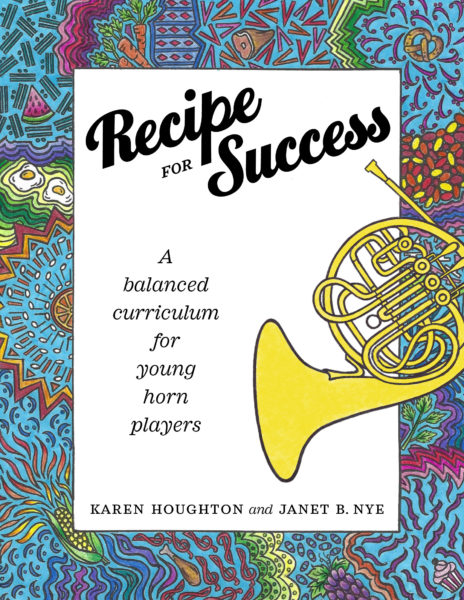
Review: Recipe for Success by Karen Houghton and Janet B. Nye

At our annual Brass Day event back in February, Karen Houghton and Janet B. Nye from Houghton Horns were our exhibitors and also guest presenters. While here, they gave a preview of their upcoming TMEA presentation, “Revealing the Secrets of Teaching Horn,” which was based on materials from their forthcoming method book, Recipe for Successs: A Balanced Curriculum for Young Horn Players. They were generous enough to give me an advance draft, which I’ve really enjoyed reading through and using with some of my students. Both authors have decades of practical experience as teachers and performers, and have worked with many successful young players. Recipe for Success is designed to take a player from beginner through the first 3-5 years, although the fundamentals presented are as applicable to advanced students and professionals as they are to young players. The dietary/cooking theme is fun, and makes a lot of sense when paired with musical education. This is a theme that should resonate with many age groups and levels of playing. Here’s an overview of the book’s contents and general organization.

Recipe for Success is organized into broad categories, which deal with essential components of good brass playing. Each Unit has a list of objectives, which should be very helpful for teachers of beginners, especially if horn isn’t their primary instrument. Units are divided into three levels of difficulty (breakfast, lunch, and dinner), and are paired with a basic food group (Dairy, Fruit and Vegetables, Meat, Grains, Dessert). The authors note that students should work through all of the categories (i.e. food groups) at the same level (1, 2, or 3) with the guidance of a teacher. A sample study plan is included to help get students and their teachers started. The chapters and topics are as follows:

    • Appetizers – Addresses parts of the horn, holding the horn, basic maintenance, right hand position, posture, embouchure, and tuning.
    • Getting started – Covers breathing, buzzing, first notes, pitch ID, and horn vs concert pitch.
    • Breathing and Tone (Dairy)
    • Range and Flexibility (Fruit and Vegetables)
    • Technique (Meat)
    • Music (Grains)
    • Just for Fun (Dessert) *Contains duets from the classical repertory, holiday tunes, compositions by students ranging in age from 12-17, tunes for solo horn and piano, and even a Mad Lib style activity related to music.
    • Additional Resources
      • practice planning
      • theory basics
      • rhythm practice *Including some excellent word rhythms beneficial for students with dyslexia, ADHD, and other learning differences. This material is based on research by Drs. Benjamin and Sara Raviotta. For more information on this topic, refer to Dr. Benjamin Raviotta’s dissertation as well as their two-part article, “ADHD and Dyslexia: Learning Differences in the Private Studio,” in the February and May 2018 issues of The Horn Call.
      • bass clef introduction
      • muting/stopping
      • FAQ for band/orchestra directors
      • Glossary
      • Index
      • Fingering Chart
      • Sample Menu (practice log)

The design and overall approach of the book is light-hearted and fun, but the content is of the highest quality. This a comprehensive beginning to intermediate horn method for the 21st century, taking into account both traditional approaches as well as new information and research (ex. working with diverse learning styles, etc.) While some educators may hold differing opinions on minor points in Recipe for Success, there is hardly anything I would consider controversial. The spiral binding, quality printing and sturdy construction will stand up to multiple years of use. It is reasonably priced at $24.95, especially considering the large amount of material contained within (my draft copy comes in at 246 pages). For more information and to pre-order your copy, visit the Houghton Horns website, and the Houghton Horns Facebook page for a brief video introduction. Bravo to Karen and Janet on this fantastic resource!

Recording Reviews: Richard Deane; Steven Cohen

I seldom post recording reviews on this site, but every once in a while I either receive a complimentary album in the mail, or hear about a project that piques my interest. To close out a series of reviews from this summer, here are two horn recordings that are well worth your time.

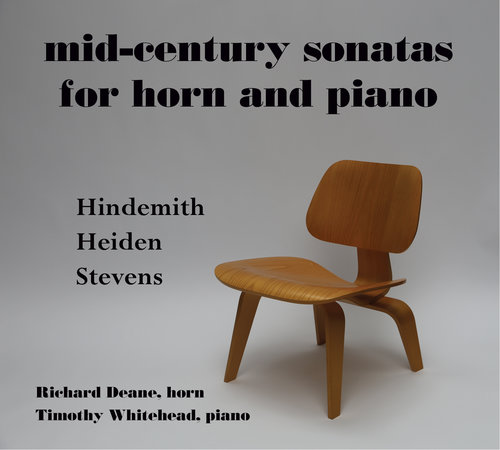
Mid-Century Sonatas for Horn and PianoRichard Deane, horn; Timothy Whitehead, piano

  • Halsey Stevens, Sonata for Horn and Piano (1953)
  • Paul Hindemith, Sonata für Althorn in Es und Klavier (1943/1956)
  • Bernard Heiden, Sonata for Horn and Piano (1939)
  • Paul Hindemith, Sonata für Horn und Klavier (1939)

Front+CoverBIGGER

These sonatas for horn and piano by Halsey Stevens, Paul Hindemith, and Bernard Heiden are staples in the repertoire. Deane is Associate Principal Horn in the New York Philharmonic, and served as Acting Principal for the 2017-18 season. He was previously a member of the Atlanta Symphony for many years. Though the repertoire is conventional, the extremely high caliber of the performances makes this recording special. Deane plays with a huge but focused sound. To my ear the “New York sound” has changed over the years, partially due to changes in equipment, I’m sure, but also probably as a response to the ever increasing demands of the job. Whitehead’s piano playing is equally impressive – especially in the final movement of the Hindemith E-flat Sonata – and is a fitting musical counterpart to the horn in these works.  There is not much in the way of liner notes, but there is a very nice video on YouTube with background about the project: https://www.youtube.com/watch?v=mP-kJf8xiJM  One other interesting note about this album is that Whitehead not only performed on piano, but did all of the recording, producing, editing, and mixing – not a small feat! The recording is both vibrant and clear, and for those who might be interested the recording equipment is listed in the liner notes.

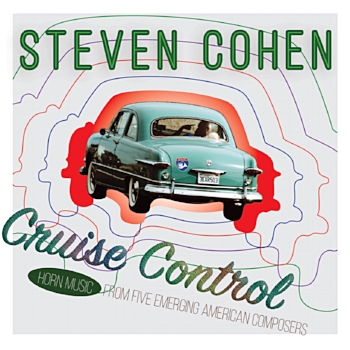
Cruise Control: Horn Music from Five Emerging American Composers – Steven Cohen, horn; Jed Moss, piano; Scott Shinbara, percussion; Amanda Sealock, percussion

  • James Naigus, Sonata for Horn and Piano
  • Jenni Brandon, Dawn for Horn in F and Piano
  • Adam Wolf, Cruise Control for Horn, Piano and Percussion
  • Wayne Lu, Pranayama
  • Gina Gillie, Sonata for Horn and Piano

IMG_5653

Cruise Control is a contrasting but equally interesting album by New York City freelancer Steven Cohen, and features world premiere recordings by several up and coming American composers. This project was sponsored by Siegfried’s Call, with a significant portion of the funding generated through an Indiegogo campaign. Be sure to check out the Indiegogo link for more information about the project and the commissioning process.

The music on this disc is fun and fresh, and showcases what I think the horn does best: play beautiful melodies and exhibit a variety of timbres. Cohen navigates the full range of the horn with ease and expression (using similar equipment to Richard Deane, a triple horn by Engelbert Schmid). Stylistically there is a bit of everything on this recording, from Neo-romanticism in the Sonatas by James Naigus and Gina Gillie to Minimalism and Rock in Cruise Control by Adam Wolf, and avant garde extended techniques in the works by Jenni Brandon and Wayne Lu. This recording is a musical and technical tour de force, and serves as a great resource for anyone interested in new music for the horn.

Etude Reviews: Rhythm Kopprasch and Harmony Kopprasch, by Jeffrey Agrell

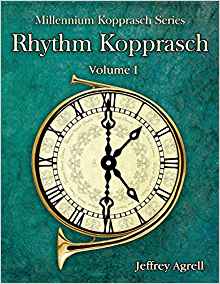
Earlier this summer I received complimentary copies of Rhythm Kopprasch and Harmony Koppraschtwo volumes in the Millenium Kopprasch series by Jeffrey Agrell, Professor of Horn at the University of Iowa. I’m a big fan of Professor Agrell’s work, and have reviewed several of his other publications, including Improvisation Games for Classical Musicians, Horn Technique, and The Creative Hornist.
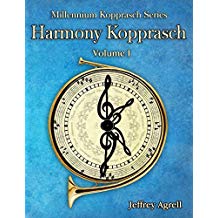
The Millenium Kopprasch  series contains creative reinventions of classic Kopprasch Op. 6 etudes, made more applicable to the 21st-century hornist. The range and basic patterns of the original etudes are still there, but in modified forms. Rhythm Kopprasch incorporates mixed meters, unusual accent patterns, syncopation, and ties, while Harmony Kopprasch explores modes, awkward intervals, Blues scales, and more. Dynamics and tempo markings are intentionally left up to the player, although the markings in the original etudes would be a good place to start. Traditionally the Op. 6 etudes are used as a school of transposition, and to reinforce basic concepts of technique and sound production. More advanced etudes are necessary to develop technique further – Reynolds, Schuller, etc. Because the Millenium Kopprasch series breathes new life into the venerable Op. 6 studies, it opens up many possibilities for teachers and students. These are tough, and will push you beyond what is required for the original studies. But, they are also really fun to play. The patterns are much less familiar than the diatonic scales and arpeggios of the originals, and take far more concentration.
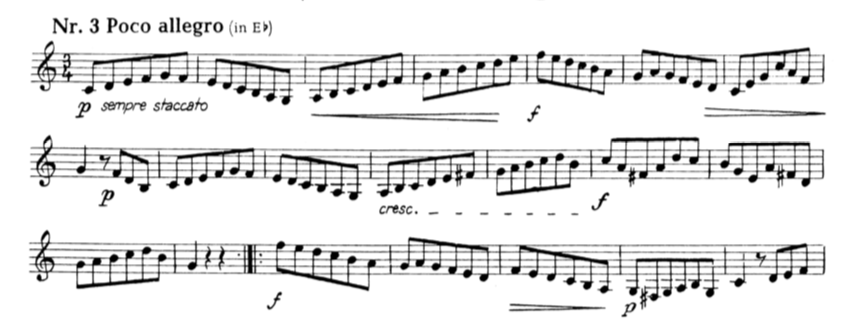
Here are some brief examples which demonstrate the kind of transformations you’ll find in these new Kopprasch studies. First is the original Kopprasch No. 3, Poco Allegro. *This is a pretty old recording from my Kopprasch video project, and the score is from the Hofmeister edition on IMSLP.

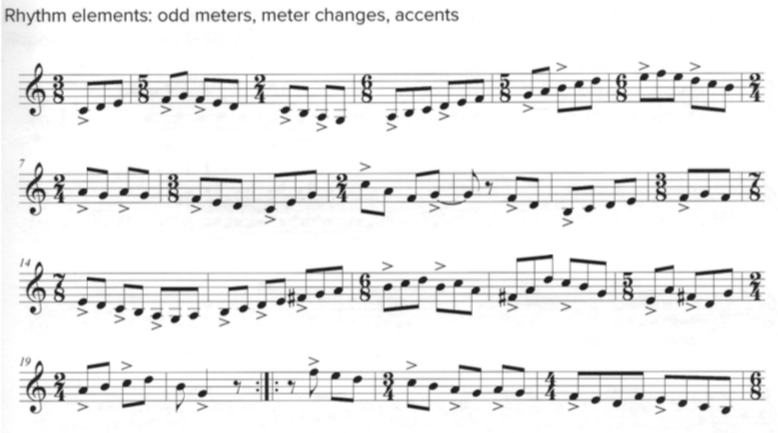
Next is the first half of the corresponding Etude No. 3 from Rhythm Kopprasch, shared here by permission of the author. The basics are still there, with the added fun of mixed meters and accent patterns.

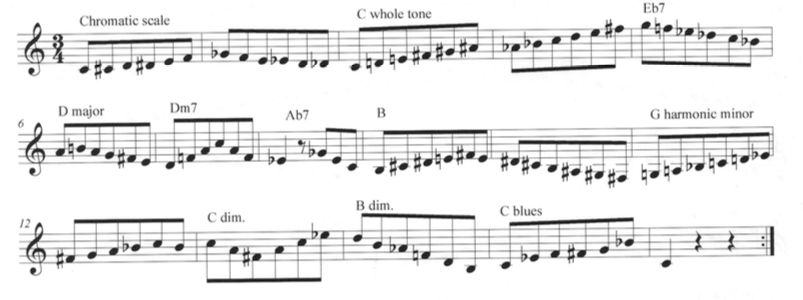
And now the same thing from Harmony Kopprasch, which includes a variety of scales and arpeggios beyond diatonic major and minor (notice the helpful annotations for the source material) .

The quality engraving and attractive covers make for a very nice package, although a spiral binding would make the books a little easier to put on a music stand. As with all of Agrell’s publications, Rhythm Kopprasch and Harmony Kopprasch represent significant contributions to the existing horn literature. And, much like the original studies on which they are based, this series will continue to challenge (and possibly frustrate – but in a good way) hornists for years to come.

Book Review: The Creative Hornist, by Jeffrey Agrell

During the summer months I usually make it a point to read both for business and pleasure. Throughout the academic year, many great books, articles, websites, and other forms of media come across my desk, but alas most of them get put aside in favor of more pressing tasks. Thankfully, the summer allows me to relax a bit and catch up on some reading. First on my list this year is Professor Jeffrey Agrell‘s new book The Creative Hornist: Essays, Rants, and Odes for the Classical Horn Player on Creative Music Making , which actually fits very nicely into both the business and pleasure category. His writing is well thought out, eminently practical, and just plain fun to read. It is an excellent companion to his book Horn Technique  (see review here), and contains both expanded versions of previously published articles (see The Horn Call) as well as new material. Those who are familiar with Agrell’s work will know that he has an incredibly fertile mind, full of intriguing thoughts on both large and small scales. As with Horn Technique, my mind boggled at the sheer amount of ideas found in these pages, any one of which could become the basis for extended study. To me, The Creative Hornist  is less horn-oriented than Horn Technique, and provides a template for teaching and studying on any instrument. The bottom line is if you are a musician, you should read this book! The topics he covers range everywhere from reinventing the dreaded undergraduate “scale test” to general ideas on creativity (the SCAMPER method).

Other chapters address ways to incorporate technology and improvisation into the traditional paradigm of horn lessons, which Agrell dubs the “Chicago Model” – i.e. the path to becoming the next Principal Horn of the Chicago Symphony Orchestra. This is a path which Agrell acknowledges has great merit, but which can also result in a relatively narrow range of musical skills.

One theme that comes through in every chapter is that creativity takes work! But Agrell’s book takes the mystery out of what being creative actually is. Because teaching and learning this way goes against the established paradigm in music schools, it may initially present some difficulties. However, it is  arguably just as effective at training competent players and almost certainly better (in my opinion) at developing overall musicianship. Needless to say, I am eager to try some of these ideas with my students this fall.  The Creative Hornist  is a great summer read to keep you inspired and give you a running start for the fall semester. For more information, visit the book’s website, http://thecreativehornist.com/.

Yamaha Performing Artist Info: “Why I Play Yamaha”

I recently found out that my application to become a Yamaha Performing Artist was accepted, and I am very excited to be joining their roster of brass players. Many major instrument manufacturers, as well as a few smaller ones, have “Artist Endorsements” or similar programs which provide mutual benefits to both parties. I can’t speak to the details of the various companies, but they generally include:
  • Being listed as an “_______ Artist” in both print and electronic media
  • Preferred pricing and other discounts on instruments and accessories
  • Updates about new instrument models and initiatives within the company
  • Funding for bringing in other endorsing artists, and sometimes funding to give clinics
  • Various other perks

In the case of Yamaha, their Artist program provides all of the above, as well as some other benefits unique to the company. Obviously, I feel very strongly about the high quality and reliability of Yamaha’s products, or I wouldn’t perform on them myself or recommend them to students. I have performed on Yamaha horns for much of my professional career, playing solo, chamber, and orchestral music. My relationship with Yamaha horns goes back twenty years, with the first instrument I owned as a student, a YHR 667V. I played on that horn all the way through my master’s degree, and continued through doctoral school and the first five years of full-time college teaching on a YHR 667VL.

Even before that I remember being captivated by the sound of my teacher on her 800 series custom model. In many ways, Yamaha instruments helped shape my concept of the ideal horn sound. As I wrote in this post, one of the main reasons I chose a YHR 671 over my Engelbert Schmid was for the sound. Over a year  later, I’m still very happy with the instrument. I later came to find out that the initial sluggishness with the valves – which is very uncharacteristic of Yamahas – was probably due to buffing compound somehow getting down into the valve casings after the lacquer was removed. This problem was taken care of by Houghton Horns at no charge, and the valves have been worry-free since then. In addition to their quality and consistency, here are a few other reasons I choose to play and endorse Yamaha horns.

  • The company is committed to music education through a variety of programs, including funding for clinicians, and the Yamaha Young Performing Artists Competition.
  • Their line of horns covers everything from beginner through professional level, while maintaining a high level of consistency. Another way of putting this is that they make horns that my students and area music programs can actually afford.

I hope that this hasn’t read as some type of overblown advertisement, but I really do feel strongly about Yamaha Horns. There are obviously  lots of great horns out there by both large and small-scale makers, but if you are in the market for a new horn I encourage you to give Yamaha a try. For the money I don’t think you can find a better instrument.

Brief Review: Audrey Flores, Solo Horn Recording

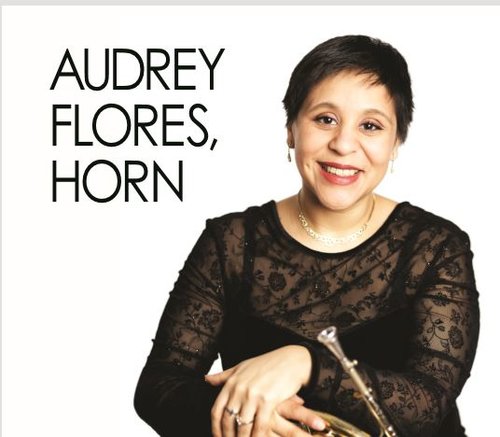
This summer I was contacted by Audrey Flores, an active freelancer in New York City, with information about her recent solo recording with pianist Manon Hutton-DeWys. The self-titled album consists largely of standard 20th-century works, with the addition of a lesser-known but equally substantial piece, Barbara York’s Sonata for Horn and Piano. Here’s a complete list of the contents.

  • Reinhold Gliere, Four Pieces, Op. 35
  • Bernhard Krol, Laudatio
  • Barbara York, Sonata for Horn
  • Otto Ketting, Intrada
  • Trygve Madsen, Sonata for Horn, Op. 24

These are solid recordings of repertoire that every serious horn player needs to know, and Flores and Hutton-DeWys play with great style, tone, and phrasing. Even if you own other recordings, these are definitely worth a listen. The real gem on this album, though, is the Sonata by Barbara York. Composed in 2009 for Chief Musician Heather Doughty of the U.S. Coast Guard Band, this three-movement work is both lyrical and athletic, requiring plenty of technique, endurance, and flexibility. The third movement is given an especially impressive rendition by Flores, in what may very well be a world premiere recording. But don’t take my word for it – you can listen to the entire album on both Spotify and  YouTube. I love learning about new repertoire for the horn, and I’ll be adding the York Sonata to my list of recital program material for the near future. It’s worth noting that York has another work for horn and piano, the Arioso Gloria.

Bravo to Ms. Flores and her collaborators on this fine recording!


Brief Review: Horn Technique by Jeffrey Agrell

During the summer I tend to take a break from reading horn-related books and articles, reading more science fiction and other types of “for-pleasure” stuff than I do during the academic year. This summer, though, I made it a point to dive into Professor Jeffrey Agrell’s magnum opus, Horn Technique: A New Approach to an Old Instrument. As John Ericson noted in his review on Horn Matters, a “brief” review of this nearly 500-page tome is next to impossible. But…if I could offer only two words about Professor Agrell’s new book, they would be “buy it!” You won’t find a more thoughtful, comprehensive, top-to-bottom, nuts and bolts discussion of horn playing anywhere. In a holistic yet meticulously detailed way, Agrell addresses not only horn playing, but overall musicianship as well. While many of the chapters cover traditional material – warming up, practice strategies, fingering, etc. – Agrell’s approach is always fresh and full of unique ways to tackle familiar problems. Jeff loves to challenge our (mis)conceptions, and brings to bear decades of teaching and performing experience. In some ways, though, the title is misleading, as Horn Technique is much more ambitious in its scope. Agrell proposes a reboot of the traditional way we approach music education. Instead of obsessing about note names and fingerings as beginners, we ought to learn music the way babies learn spoken language – through imitation, improvisation, and memorization of brief patterns which can be built upon later. Only once those basics are mastered should notation be introduced.

Stepping back a bit, here are some of the big themes I took away from Horn Technique. There are certainly more, but these are the ones that jumped out to me.

  • Horn (and all brass) players need to have a detailed working knowledge of the overtone (harmonic) series. We need to know the overtone series number and intonation tendency for every note on the horn – Agrell calls this “horn math.”
  • Warm-ups and practice sessions should begin without using the valves (all overtone series) and then progress to using the valves. Historically, the horn developed this way, and it makes sense from a physical perspective as well. Many of the exercises in Horn Technique begin without valves and add valves later.
  • We need to know how to apply our knowledge of music theory to create real-world practice strategies. Agrell walks the reader through this approach, showing us first how to identify and analyze patterns, and then to create our own custom exercises based on those patterns.
  • Less Notes, More Music. One of the big principles in Horn Technique is that we spend entirely too much time with our heads buried in a music stand. Agrell advocates for more notation-free practice. Related to this, Agrell is also a big proponent of performing from memory.
  • Question Everything! At the heart of this book is the idea of questioning traditional approaches to horn playing. There is of course much to be learned from the great players and teachers of the past, but Agrell asks that we be willing to consider alternative methods along with traditional ones.

Although I’ve read the entire book cover to cover, I’ve only just begun to dig into Horn Technique. The principles and exercises in it will keep both my students and me occupied for some time. And at $19.99 for the hard copy, this is an incredibly affordable text.