Notes from a Recording Session

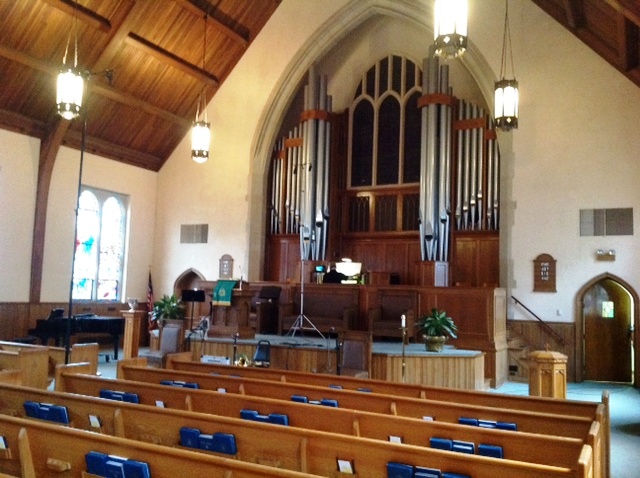
For the first part of this week I am in Savannah, GA recording some works for my forthcoming CD project, works for horn by Jan Koetsier. Things went very well today, and I feel good about the material we have so far. I’ll post more details as the project continues, but for the Savannah session we recorded a substantial piece for horn and organ, the Choralfantasie, Op. 89 as well as selections from 13 Characteristic Etudes. I was very impressed with the professionalism of both of my collaborators, Rich Mays (engineer/producer) of Sonare Recordings and Matthew McMahan, organist at Decatur Presbyterian Church in Georgia. I’m feeling a little drained, both physically and mentally, from the session today, but here are a few preliminary thoughts about the experience. First, some pictures of the venue, First Presbyterian Church of Savannah. This space was highly recommended because of its acoustics, and also the high quality of the organ, shown below.

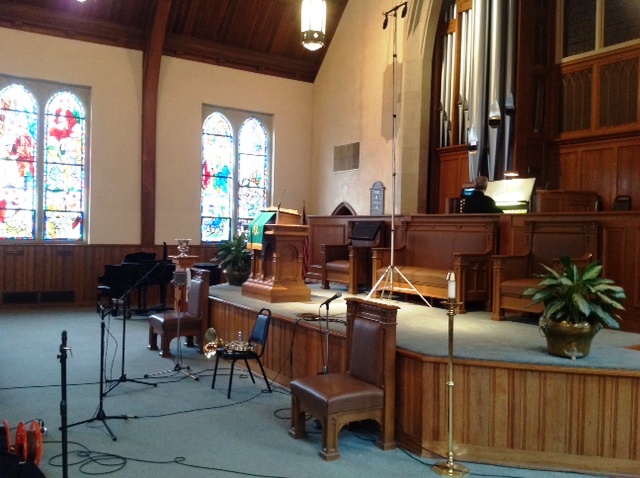
Here’s another shot, this time of the recording setup. There is a small video camera directly in front of the horn chair, which fed into a monitor on the organ console to facilitate communication.
After tweaking the levels and microphone placement, we spent the first part of the morning doing some spot checking and rehearsing the transitions in the horn and organ work. One big issue for me was keeping my pitch low enough to match the organ. My tendency is to be a bit sharp, so I pulled the main slide some and tried to relax down into the “groove” of each note as much as possible. Timing entrances and releases with the organ also took some time to work out, but we got there eventually. Again, I was thoroughly impressed with how the session was run, and am looking forward to hearing the final product! From listening to the playback on several takes, I can say that the Choralfantasie should come off quite convincingly. The piece is around 10-12 minutes in length, with some big, heroic writing for the horn and several virtuosic passages for the organ. After the Choralfantasie we finished out today’s session with an etude based on rhythms from Stravinsky’s The Rite of Spring. Though brief, the piece is full of challenging rhythms and intervals, and will make a nice addition to the CD. The next session is slated for December in my university’s recital hall, where we’ll be recording the remainder of the works on the album. More to come!

Cannon Music Camp Week 3: Lists, Finale Concerts, and Wrapping Up

It’s been a great three weeks, but Cannon Music Camp has come to an end for this summer. It was a pleasure working with the eager and talented students here, and I am grateful for the opportunity. We wrapped things up this week with a master class built around “must have” lists for horn players, i.e. music, equipment, and other items that I think every horn player should know about. In deciding what to present in the last studio class, I thought back on many of the questions that came up over three weeks of lessons. The list at the end of this post attempts to address, at least in part, some of those questions. It is not comprehensive, but is representative of the kinds of materials I use in my teaching. Though there are many, many more wonderful resources out there for horn players and teachers, these are the ones I keep coming back to and freely recommend.

I can’t wrap up this year’s camp without mentioning the numerous finale concerts at the end of the third week. All of the ensembles at Cannon performed very well, presenting exciting and challenging programs. Bravo! I want to extend a special thanks to Dr. Stephen Hopkins, Director of Cannon Music Camp, and Dr. Karen Robertson, Professor of Horn at Appalachian State University, for extending the invitation to teach at this year’s camp. Thank you as well to the counselors and other staff for their tireless efforts to make sure the day to day operations ran smoothly. Finally, I want to thank the horn students for all of their hard work in lessons, ensembles, and numerous other activities. Thank you for inspiring me, and good luck in this upcoming school year! Here’s a picture of the Cannon horn studio. Back row (L to R): James Boldin, Sada Harris, Nicholas Brooks, Chris Klim, Joshua Anderson. Front Row (L to R): Walter Bonar, Copeland Byars, Philip Norris, Raymond Adams.

Equipment, Books, Music, and More!
“Must-Have” Lists for Horn Players: Cannon Music Camp 2012

Books
Methods

  • The Art of French Horn Playing, Philip Farkas
  • Collected Thoughts on Teaching and Learning, Creativity and Horn Performance, Douglas Hill
  • Thoughts on Playing the Horn…Well, Frøydis Ree Wekre

History

  • The Cambridge Companion to Brass Instruments, Trevor Herbert and John Wallace
  • Brass Instruments, Their History and Development, Anthony Baines
  • Dennis Brain: A Life in Music, Stephen J. Gamble and William C. Lynch

Other

  • The Art of Musicianship, Philip Farkas
  • The Inner Game of Tennis, W. Timothy Gallwey
  • Flow: The Psychology of Optimal Performance, Mihaly Csikszentmihalyi

Sheet Music
Warm-ups/Routines

Etudes

Solos

  • Concerto No. 1 in D, K. 412; Concerto No. 2 in E-flat, K. 417; Concerto No. 3 in E-flat,K 447; Concerto No. 4 in E-flat, K. 495; Concert Rondo; Quintet for horn and strings, K. 407, W.A. Mozart [purchase in original keys, NOT transposed for Horn in F]
  • Concerto No. 1, Op. 11; Concerto No. 2, Richard Strauss
  • First Solos for the Horn Player and Solos for the Horn Player, ed. Mason Jones
  • The Horn Collection, G. Schirmer (3 volumes, with accomp. CD)

Excerpts

  • Horn Player’s Audition Handbook, ed. Arthur LaBar
  • The Orchestral Audition Repertoire For Horn: Comprehensive and Unabridged, ed. David Thompson

Equipment
Horns (a few recommendations)

  • Yamaha 667, 667V, 668, 668V
  • Conn 10D, 11D, 8D, V8D
  • Hans Hoyer G-10, 6802, 7802
  • Paxman 20, 23, 25
  • Alexander 103
  • Handmade Custom Horns ($$$) include: Rauch, Berg, Sorley, Englebert Schmid, Patterson, Hatch, Medlin, Hill, Lewis, Lewis-Duerk, and more…

Mouthpieces

  • Laskey, Houser, Moosewood, Stork, Schilke

Mutes

  • Straight Mutes: Balu, Trumcor, Moosic, Marcus Bonna
  • Stop Mutes: Balu, Alexander, Tom Crown
  • Practice Mutes: Balu, Wallace, Best Brass, Faxx

Cases

  • Marcus Bonna, Thompson Edition, Protec, BAGS

Other

  • Hetman Lubricants
  • Leather Specialties (left hand guards)
  • Alexander and Englbert Schmid (left hand supports)

Websites
General

Instruments

Sheet Music

Videos

Recordings

Cannon Music Camp Week 2: Great Repertoire, More Lessons, a Solo Performance, and a Maintenance Clinic

Week two of Cannon Music Camp has come and gone, and here’s a brief update on some of last week’s activities.

  • Great Repertoire: In preparation for their finale concerts at the end of Week 3, the orchestra, wind ensemble, and symphonic band are working on some great pieces with fun and challenging horn parts. Highlights include a band transcription of the Olympic Fanfare and Theme by John Williams, and the symphonic poem In the Steppes of Central Asia by Borodin. The student brass and woodwind quintets are also preparing movements from two standard works for those ensembles, Victor Ewald’s Brass Quintet No. 1, and August Klughart’s Wind Quintet. One of the most beneficial elements of any summer music camp is the opportunity to see lots of repertoire in a short period of time. For many students, the amount of music they rehearse and perform at a music camp or festival is equal or greater to the amount seen in an entire semester at school.
  • More Lessons: Lessons have been going very well, and I’ve gotten a chance to work with students on some more in depth topics during Week 2. Even though our time at camp has been limited, I’ve been making short practice assignments for the students from week to week. These often involve working on a specific technical exercise, all or part of an etude or solo, or simply making sure to warm up every day. Even in this short amount of time I can already hear improvement in everyone’s playing – bravo!
  • Solo Performance: On Tuesday I performed on the second of two faculty showcase recitals, playing Eric Ruske’s arrangement of Arban’s Fantasy and Variations on the Carnival of Venice. Kudos to pianist Aaron Ames for putting together the accompaniment in a very short amount of rehearsal time. I’ve been working on this technically challenging piece periodically over the last four years or so, and finally decided to program it on a public recital. Overall the performance went well – it is an impressive sounding work, and will really push your multiple tonguing, flexibility, and all around dexterity on the instrument. Though originally intended for solo cornet, it can be done on the horn, and has been recorded by Eric Ruske and Jacek Muzyk.
  • Maintenance Clinic: Last Monday’s master class focused on the topic of basic horn maintenance and repair. Even beginning horn players can be taught how to oil valves, grease slides, and restring rotors, and it’s never too early to start in my opinion. We discussed several ways to keep a horn in good working condition, and I put together the following maintenance schedule for the students to use as a reference. (Maintenance Schedule) For another take on this topic be sure to read this article by brass repair technician Dave Weiner.

Here are some other general maintenance tips:

  1. Keep an emergency repair kit in your case at all times containing: screwdriver(s), valve oil, slide grease, rubber bands (to temporarily repair a broken valve spring), and precut and tied lengths of valve string.
  2. Have any major dents in your horn immediately repaired by a qualified technician.  The smaller the tubing, the greater the effect a dent will have on the playing characteristics of the horn.  (ex. leadpipe)
  3.  Depending on the way your skin reacts with the metal of your horn, you may need to wipe clean any fingerprints after playing with a soft cloth and/or purchase a leather/neoprene handguard.
  4. When in doubt, leave any repairs (except oiling and restringing) to a PROFESSIONAL.  Trying to disassemble valves or remove stuck slides/mouthpieces without the proper training and equipment will only result in bigger repair bills.  Regular maintenance will help postpone or prevent any major repairs to your horn.

There are also a number of helpful “how to” videos on the internet, including this collection I put together a few years back. It was a busy but extremely fun week, and I’m excited about Week 3!

Video: Eric Ewazen’s Ballade, Pastorale and Dance for Flute, Horn and Piano

Earlier this year I had the opportunity to perform a major contemporary chamber work for horn, Eric Ewazen’s Ballade, Pastorale and Dance for Flute, Horn and Piano (cover image linked from sheetmusicplus.com). The performance took place during a residency with the composer at our university, and our group was fortunate enough to be coached by Dr. Ewazen. The performance went well, and I’ve posted a video of each movement to YouTube (see below). The composer graciously granted his permission to share the recordings. The piece is challenging, but well worth the time spent learning it. The music is very accessible to audiences, but rewarding for the performers as well. The piece has also been orchestrated by the composer into a double concerto for flute and horn with orchestra.
Movement I

Movement II

Movement III

IHS Symposium Report, Part 2

Here’s the second in my series of reports on the 44th International Horn Symposium in Denton, TX. As with yesterday, today’s schedule was packed with numerous performances, including my performance on one of the contributing artist recitals. The first event of the day for me was a clinic titled “Horn in the Woodwind Quintet,” presented by Nicholas Smith and the Lieurance Woodwind Quintet from Wichita State University. Professor Smith offered some very practical tips for horn players in wind quintets, and his points were expertly demonstrated by the group. Their program included a complete performance of Barber’s Summer Music, Op. 31, one of the standards in the wind quintet repertoire, as well as works by Jacques Ibert, Scott Joplin, and Anton Reicha. A couple of tips that really stood out to me were 1) horn players must often re-interpret dynamic markings to match the group and 2) an orchestral concept of sound and articulations really doesn’t work too well in a wind quintet. Using examples from their program, the quintet demonstrated each passage twice, the first time with the horn performing in a less desirable manner, and the second time in an ideal manner. One last comment that interested me was about equipment. Professor Smith said that since most of his work is in the Wichita Symphony, he plays a bigger, more orchestrally suited instrument (Paxman triple, I think). He said that he has tried switching to a lighter horn for the quintet, but it just doesn’t work for him. As a result, he has to be particularly sensitive when he plays in the quintet, adjusting his sound, dynamics, and articulations to emulate a lighter instrument. This was a great lecture, and if you haven’t heard the Lieurance Quintet before they have several CDs available on Amazon.

Next, I stopped by one of the exhibit rooms to purchase some music – one of my favorite things to do at conferences. Having already bought a good deal of solo and ensemble music earlier this year, I focused on methods and etude books. Two items I really look forward to working with are Randall Faust’s A Hornist’s Handbook of Studies for Flexibility and Technical Development, and Paul Basler’s two volumes of Etudes for Horn.  Check out a review of these etudes at Horn Matters. One other publication I picked up is a reprint of a short handbook by Christopher Leuba called The Rules of the Game. I’ve only thumbed through it a few times today, but it appears to be similar in some ways to The Art of Musicianship by Philip Farkas: i.e. it uses excerpts from the standard orchestral and solo repertoire to set out some basic principles of music making.

After lunch I squeezed in a little down time before playing on the 3:00pm contributing artists recital. Other performers and repertoire on that recital included:

All of these players (and their supporting artists) sounded fantastic – these were tough acts to follow! But overall I felt good about our performance of Jan Koetsier’s Sonata for Horn and Harp, Op. 94, and got some nice comments from people afterwards. It really is a well written piece, and horn and harp is a nice combination.

Changing gears completely from yesterday evening’s concert, tonight featured Andrew Clark, Steven Denroche, Paul Hopkins, and Bruce Atwell performing music for 2, 3, and 4 horns from the Baroque era. This was an entertaining and very informative concert, performed exclusively on period instruments. Andrew Clark was able to do things on the natural horn that would be difficult even with valves. My favorite work on the program was probably the Concerto in F Major by Johann David Heinichen. Heinichen was the court composer at Dresden in the early 18th century, and Clark informed the audience that Heinichen wrote this work for the first two full-time professional horn players (prior to them, trumpet players doubled on horn).

Due to some prior commitments in Monroe, tomorrow will be my last day in Denton. I plan to attend a lecture in the morning, so be sure to check back here in the next day or so for an update and some summary comments about my experience at this year’s symposium.

IHS Symposium Report, Part 1

As promised, here are a few thoughts from my first day at the 44th International Horn Symposium, hosted by Professor William Scharnberg and the University of North Texas College of Music. I arrived at the symposium this afternoon, and after registering and poking around briefly in a few exhibits, had a good rehearsal with my collaborator for tomorrow’s performance. I spent some more time perusing the exhibits, and will probably return tomorrow to buy some music. By this point it was around 4:00pm, so I left the symposium to check into my hotel and grab some dinner before the 7:30pm concert featuring the UNT Wind Symphony and several world class soloists.

The concert began with American Overture for band, by Joseph Willcox Jenkins. This well known work featured a beefed up horn section consisting of UNT students along with Frank Lloyd, Michael Morrow, Susan McCullough, and Marcia Spence. Following this rousing opener, Jennifer Montone impeccably performed Strauss 1, with the UNT Wind Symphony providing sensitive accompaniment. Bernhard Scully took the stage next, performing the Morceau de Concert by Saint-Saëns. Both these soloists displayed effortless technique and refined phrasing – and they also looked liked they were having a great time doing it! The first half closed with another band work, Festival Variations by Claude T. Smith. As in the Jenkins, the stacked horn section sounded fantastic.

The second half consisted primarily of two lesser known works in the horn repertoire. The Concerto for Four Horns by Carl Heinrich Hübler tends to be overshadowed by its flashier contemporary, Robert Schumann’s Konzertstück. However, the Hübler is still a very nice work, and gives each of the four soloists a chance to shine, without some of the treacherousness of the Schumann. The soloists for this evening’s performance were Tsun Tak Cheung (Principal Horn, Rheinische Philharmonie), Randall Faust, Peter Luff, and Michelle Stebleton.  Though clearly playing on different equipment, this international quartet performed very well together, and the concerto was full of exciting moments. The final soloist of the concert was Geoffrey Winter of the American Horn Quartet. He performed K’ville Skyline, a really cool but obscure work by Jay Wadenpfuhl (1950-2010, member of the Boston Symphony).  Mr. Winter explained just prior to his performance that Wadenpfuhl composed this concerto in 1981 for his good friend Jerry Peel, a well known studio horn player. The title is taken from the town of Kerrville, TX, where Wadenpfuhl and Peel both grew up. I really liked this piece, though the horn part sounded fiendishly difficult in places. Both the solo and accompaniment freely incorporate elements of jazz and popular music, and the overall effect is very enjoyable to listen to. The UNT Wind Symphony brought the concert to a close with the Marsch from Paul Hindemith’s Symphonic Metamorphosis after Themes by Carl Maria von Weber. Once again, the horn section was the star, a fitting conclusion to a concert at a horn symposium. It’s been a busy day, so I am going to turn in, but first, a big kudos and thank you to Bill Scharnberg and his staff for getting this year’s symposium off to a great start! More updates to come…

Students: Looking for Something to Do this Summer?

We heard some great brass juries today – bravo to all the students on their hard work!  I’m planning to post a bit more about juries on Wednesday, but for today here’s a list of some projects for horn students (and other brass players) to consider over the summer break. Summer is a great time to build on the momentum from your end-of-semester jury, and any of the projects on this list would make a good way to spend a few weeks (or more) over the break. Go ahead and take a few days if you need to decompress after the stress of final exams, but before you get too far into the summer make sure you have a plan for how you want to improve. Pick two or three things off the list to start, and come up with your own creative ideas to supplement. Have some other ideas for fun summer horn-related projects?  Feel free to comment.

Excerpt Duet Based on Beethoven, Symphony No. 9

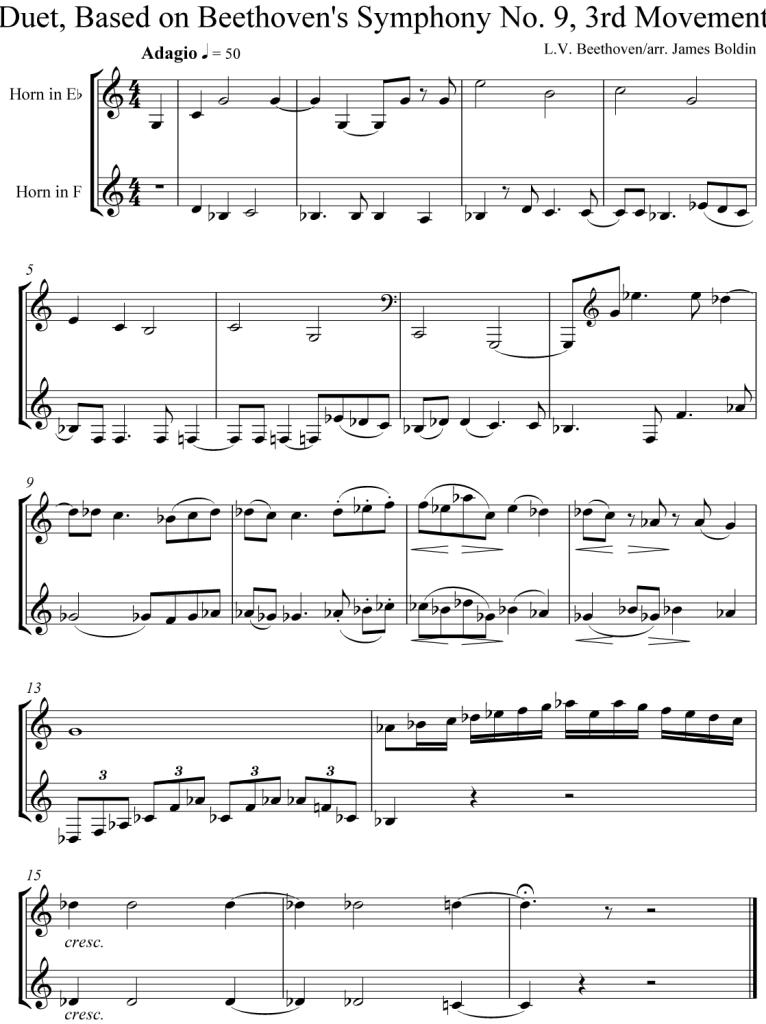
If you liked the previous duets I’ve posted for Brahms Symphony No. 3 and the Mendelssohn Nocturne,  here’s another one based on the famous 4th horn solo from the third movement of Beethoven’s Ninth Symphony.  The duet part is meant to help the student establish and maintain excellent rhythm and intonation throughout the passage, and is based primarily on the 1st bassoon, 1st clarinet, and 2nd clarinet parts. In studying the score to this passage it is quite interesting to see (and hear) the way the composer interweaves the 4th horn line, at times playing an accompanimental role, and at others a soloistic role.  Download the PDF here. Beethoven 9 Duet

Excerpt Duet Based on Mendelssohn, Nocturne from A Midsummer Night’s Dream

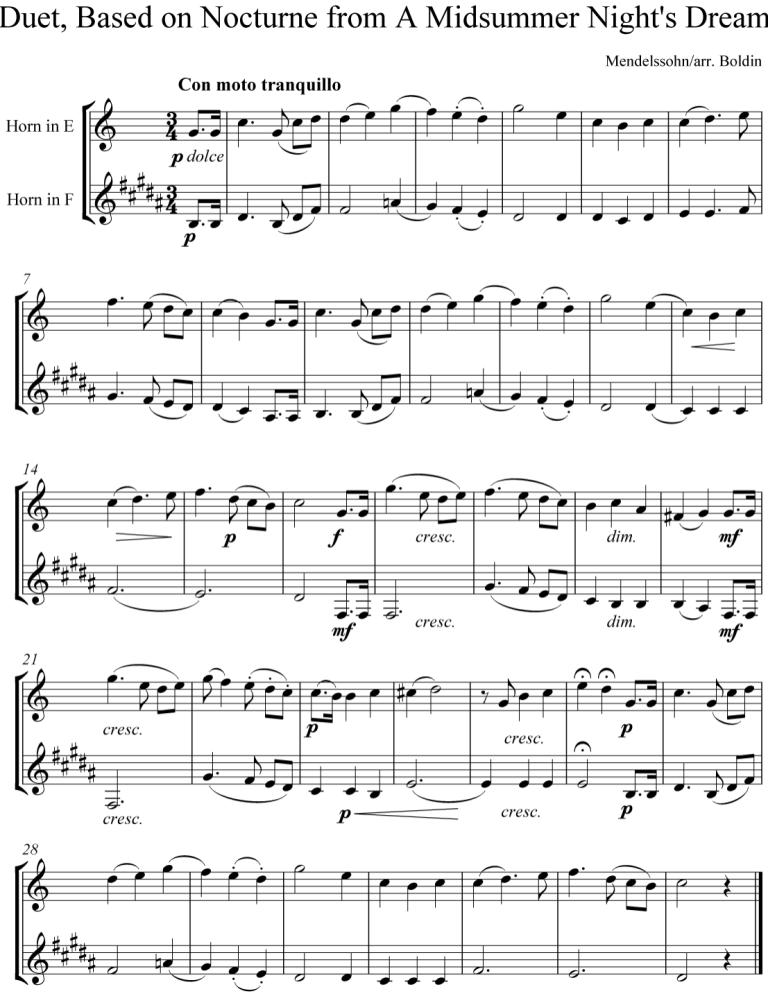
Following up on last Friday’s post, here’s another instructional duet, this time based on the Nocturne movement from Mendelssohn’s A Midsummer Night’s Dream. As with the Brahms Symphony No. 3 duet, the solo part is in the original transposition, with the second part for Horn in F. This time the duo part is based on the second bassoon part, and it should be noted that this passage is really a trio for the horn and both bassoons. In fact, it might be worth creating another duo or trio incorporating the first bassoon part. If you have only two players though (as is usually the case in a private lesson), this duet can be useful in developing good intonation and rhythm on this important excerpt.  Click the link below to download the PDF.

Mendelssohn Nocturne Duet

Excerpt Duet Based on Brahms, Symphony No. 3

As stated elsewhere on this blog, I’m a big fan of David Vining’s Long Tone Duets. They are great for working on ensemble, intonation, and lots of other issues. The final duet (No. 23) is based on the horn solo from the second movement of Tchaikovsky’s Fifth Symphony. In his preface to the horn edition of Long Tone Duets, John Ericson writes that this solo “is absolutely an excerpt that needs not only perfect intonation but awareness of the underlying harmonies and music. This duet will see much use in my teaching.” [p. i] After using this duet and others in lessons for the last several months, it finally dawned on me that a fun project might be to create other duets based on well known horn excerpts. Precise rhythm, accurate intonation, and a knowledge of the other parts is crucial when preparing any excerpt, so hopefully this duet based on the horn solo from the third movement of the Symphony No. 3 by Brahms will be useful. With the exception of the added note in the final measure, the solo part is exactly the same as the original excerpt, including the transposition (Horn in C). The second part is based on the cello and viola parts, with a few adjustments here and there to make things more playable. The part is notated for Horn in F, and can be easily sight read by the teacher. The duet is designed to help the student not only hear the underlying harmony, but also the relevant subdivisions in each measure. Feel free to print the image above or download the PDF below, and if you want to edit anything to make it more useful in your teaching by all means do that as well. Let me know if you spot any errors!

Brahms 3 Duet

I hope to do a few more of these in the future, but as this is somewhat of a side project I’m not exactly sure when they’ll be ready. Another excerpt that might work well in duo form is the “Nocturne” from Mendelssohn’s music to A Midsummer Night’s Dream.  Are there some other excerpts you would like to see turned into duets for instructional purposes?  Leave me a comment and let me know what you think.