Resources for Performing Music for Brass and Electronics

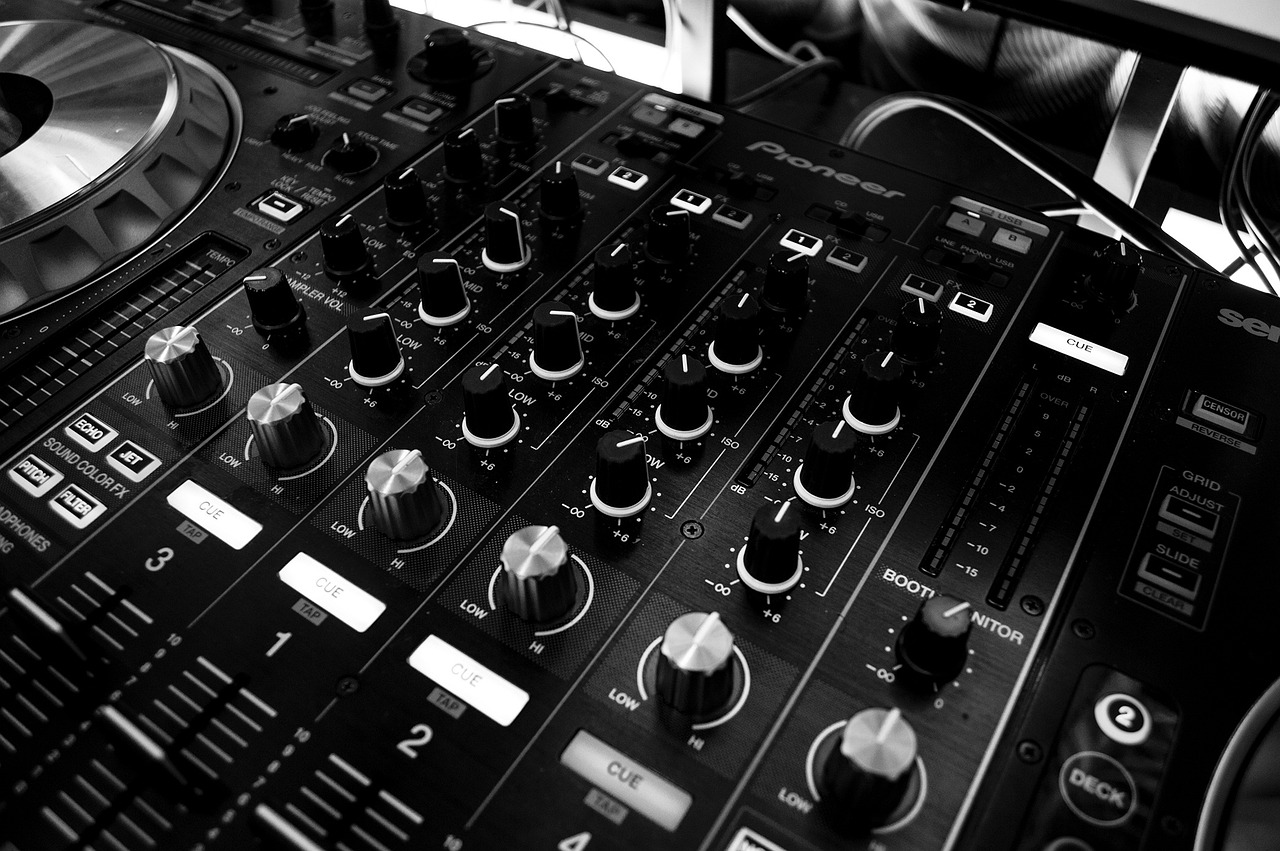
Image obtained from Pixabay.

Recently, I had the opportunity to speak with the students at Berry College in Rome, Georgia about performing music for brass and electronics. The presentation was part of a recital tour to Georgia, including visits to Dalton State College and Berry College. Unfortunately, the tour had to be cut short because of the arrival of hurricane Helene, which has impacted millions of people across the Southeast. I’m so grateful to my host, Dr. Ellie Jenkins, for the opportunity to visit. The material from the class handout can be found below, and a printable copy can be viewed and downloaded here.

Finding and Choosing Repertoire

  • Theses, Dissertations, Journal articles relevant to your area
  • Attend conferences, new music festivals, etc.
  • Internet, YouTube, Naxos Music Library, Social Media
  • Commissioning, consortia, etc.
  • Considerations:
    • Is the media fixed, or does it respond in live performance? Ex. Delay, distortion, loops, etc. 
    • If the work or works require additional equipment to perform,  how easy is it to obtain, given one’s budget, access, and other factors?

Equipment

  • Can vary depending on the performance venue. Use in house equipment, or bring your own? Advantages and disadvantages to both. 
  • Minimum equipment if you wish to use your own:
    • Portable speaker, bluetooth or wired, choose based on your needs and budget. Brands I have used and can recommend: Rockville, JBL, Bose, Ultimate Ears
    • Laptop, phone, or tablet
  • Optional Equipment, depending on repertoire:
    • Audio interface 
    • Silent Brass, for routing audio signal through effects pedals
    • Condenser and/or dynamic microphones, as needed
    • Individual effect pedals: delay, distortion, etc.
    • Effects software for live performing: I use Apple’s Mainstage
    • Video projector
    • Preamps, mixers to adjust balance of multiple inputs
    • Headphones, onstage monitor, if necessary to align with fixed media
    • Cables, power cords, extension cords, surge protectors, batteries for all of the above.

Preparation

  • Practice the work without the electronics, fixed or otherwise, until comfortable. This will avoid compounding the musical challenges of your part with navigating the technology. If fixed media, aim for the tempo markings in the piece. Tempo can be adjusted to some extent on fixed media tracks using software, but it can distort the audio (unless it’s MIDI, in which case you can change the tempo, key, etc. as much as you want).
  • When putting your part together with fixed media, make note of time codes for major sections and subsections so you can practice just those passages without having to start the track at the beginning every time. 

Performance Considerations

  • Balance between electronics and live (or amplified) sound. Consider speaker placement, if using portable speakers. Performer can move up or down stage as well if necessary for different works.
  • Distortion can occur at high playback levels, so soundcheck these using the performance equipment, if possible. 
  • As with all live performance, the acoustics and overall feel will be different onstage versus your practice room. 
  • If using multiple pieces of equipment, a piano bench or small table is helpful in making sure everything is laid out and accessible in an orderly way. Watch out for your cords!
  • Mute stands, shelves, etc. that attach to your stand can be helpful.
  • Consider the layout and setup of your program, and what’s necessary to transition from one work to the next. Percussionists think about this all the time, but brass players not so much.
  • Turn all levels to zero and turn off all components every time.  Plug in components first, then power on, then adjust levels. Avoid hot plugging. 
  • Relax and have fun sharing this repertoire!

Upcoming Performances: New Music on the Bayou Festival

Next week I’ll be performing in several concerts for the inaugural season of the  New Music on the Bayou Summer Festival. This event will involve numerous composers and performers from throughout the region and across the country, and I’m really looking forward to it! Here’s a brief description of the festival from its website:

The New Music on the Bayou Summer Festival is a chance for contemporary composers to work with professional performers during the rehearsal process and to have their new works performed by professional ensembles and musicians in an intense four-day festival. The festival features concerts at traditional and non-traditional venues. All submissions will be eligible for the Black Bayou Composition Award monetary prize.

Concerts will take place in several different venues, including concert halls on the University of Louisiana-Monroe and Louisiana Tech University campuses, a local art museum, an art crawl, and even a national wildlife refuge! The festival promises to be not only a great venue to hear new music, but also a tour of the area’s many attractions. You can peruse the festival website for more details on the above.

The festival’s organizers, Dr. Mel Mobley and Dr. Gregory Lyons, have done a fantastic job coordinating all of the various elements: composers, performers, venues, rehearsal space, etc. With rehearsals set to begin next Tuesday and the first concert on Wednesday, individual preparation by the musicians is imperative. I personally like the challenge of preparing new and unfamiliar works, and feel that all of the works our group will be performing are high quality (though sometimes quite difficult). Here’s a listing of the composer, title, and instrumentation of the works I’m involved with next week. You can follow the links to each composer’s website for additional information and audio/video samples of their music.

Each work presents some unique and rewarding challenges, but here are a few general observations.

  • Range/Endurance: New music can sometimes be unreasonable in terms of range and endurance requirements, but the above pieces are actually very playable. They aren’t simplistic by any means, but they do take into account the actual possibilities of the instruments. As a performer, this is much appreciated! Believe it or not, after playing lots of brass trio music brass quintet is a bit easier on the face.
  • Rhythm: This has probably been the most challenging (at least for me) in terms of individual preparation. A few of the pieces have lots of mixed/asymmetrical meter, and in past experiences I’ve found that rhythms which seem clear cut during individual practice can become much more difficult to “feel” during ensemble rehearsals.
  • Dynamics/Articulation/Timbre Spectrum: As one might expect with new music, composers often want to break away from the traditional sounds of a particular instrument or ensemble. None of these works calls for any unusual or rare extended techniques, but they do make full use of the dynamic and articulation spectrum, as well as multiple timbres (everything from ff flutter tongue to pppp stopped horn).

Other than Covering, which I’ve performed multiple times, all of these pieces are brand new to us, and we look forward to rehearsing them for the composers as well as performing them during the festival. If you are in the area and looking for something to do after Memorial Day, check out one or more of the concerts on the New Music on the Bayou Festival. On a larger note, if you are a performer, consider seeking out and advocating for new music. Working with living composers can give you a fresh perspective as a performer, which will carry over into other areas of your musical career.