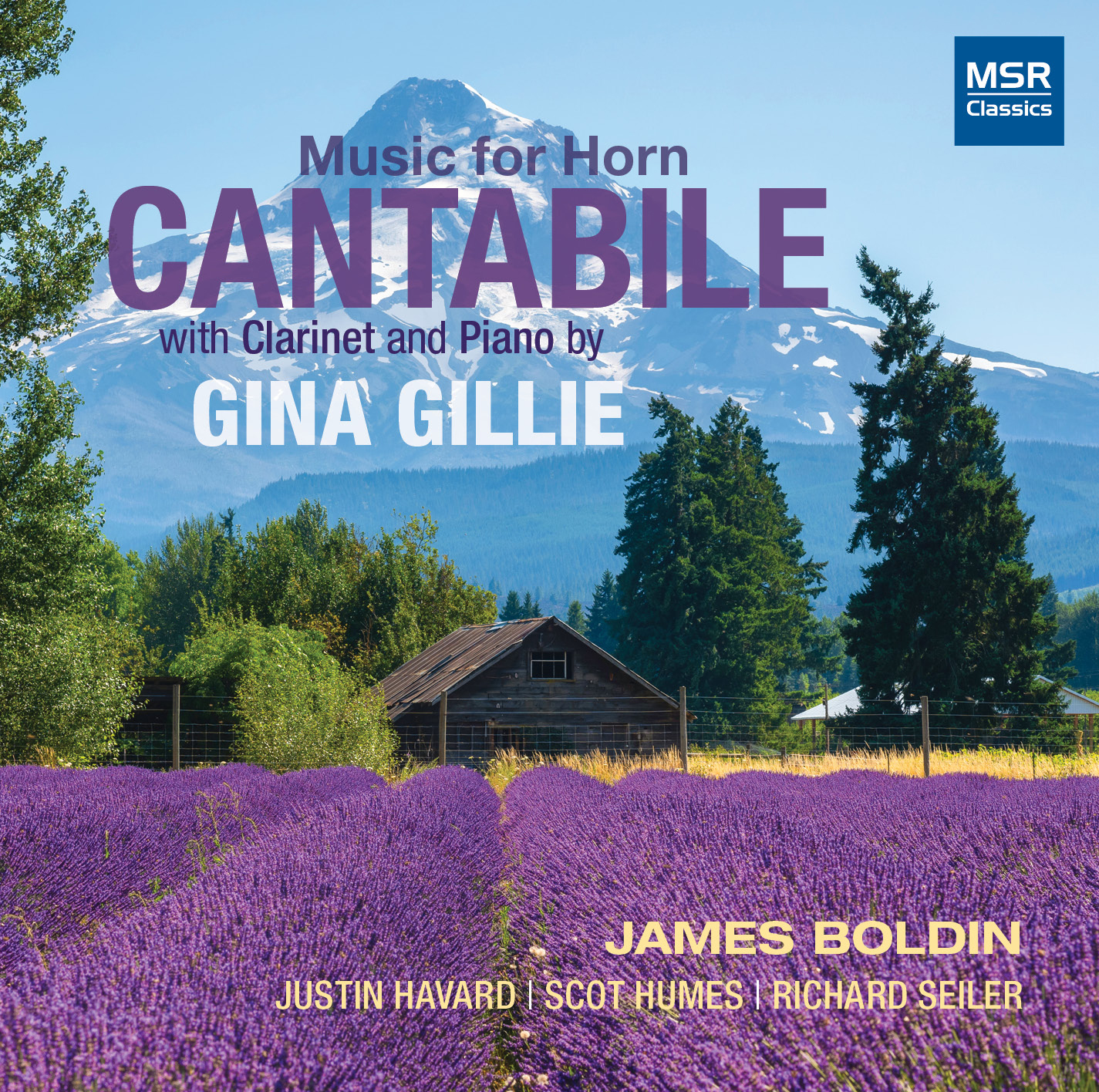
New Recording: Music for Horn by Gina Gillie

This past summer I had the opportunity to record an album of works by Gina Gillie, a composer and horn player who is becoming increasingly familiar in the horn world! The recording is titled Cantabile: Music for Horn with Clarinet and Piano by Gina Gillie, and it is available through MSR Classics at their website, on Amazon, and other outlets. Here’s a short quote from the liner notes:

I met Gina Gillie in 2004 while we were graduate students at the University of Wisconsin-Madison. Even then, it was clear that Gina was an exceptional musician with a creative gift. In the years since, she has turned what was then a burgeoning interest in composition into a growing library of works, many of which are recorded here for the first time. As both a horn player and vocalist, Gina has always been able to tap into the special singing quality of the instrument. It is fitting that the title of this album is Cantabile, as no matter the style or instrumentation, Gina’s compositions always sing. My deepest gratitude goes to my collaborators for their inspiring work, and to Gina’s and my former teacher, Douglas Hill, for encouraging our musical dreams. Thank you also to the ULM School of Visual and Performing Arts and the family of Emy-Lou Biedenharn for their support of this project.

That pretty much sums up the project, but for anyone interested here is a complete list of the pieces we recorded.

SONATA for Horn and Piano
I. Allegro moderato
II. Melodie
III. Rondo

ESCAPADE for Horn and Piano

SONG FOR THE LOST for Horn and Piano

REVERIE for Horn and Piano

ROMANCE for Wagner Tuba and Piano

THREE PAINTINGS for Clarinet, Horn and Piano
I. Highland Castle
II. Lavender Fields
III. Conneaut Rag

All but one of them – the Sonata, which was commissioned and recorded by Steven Cohen for his fantastic album Cruise Control – are world premiere recordings, and I think listeners will really enjoy them! I and two of my colleagues, Scot Humes and Richard Seiler, commissioned the final work on the album, Three Paintings. It’s a fun piece and a wonderful addition to the clarinet, horn, and piano repertoire. I also want to recognize Paul Eachus, who recorded, edited, and mastered this album. He is a fantastic musician and engineer. We were also lucky to have Gina Gillie here for the recording sessions to offer her expert advice and amazing ears. Thanks Gina! And finally, several of the works on this album – Reverie, Escapade, and the Sonata – are available through WaveFront Music, and the rest are available directly from the composer. If you like them, and I think you will, buy the music and program them yourself on an upcoming recital.
Resources for Performing Music for Brass and Electronics

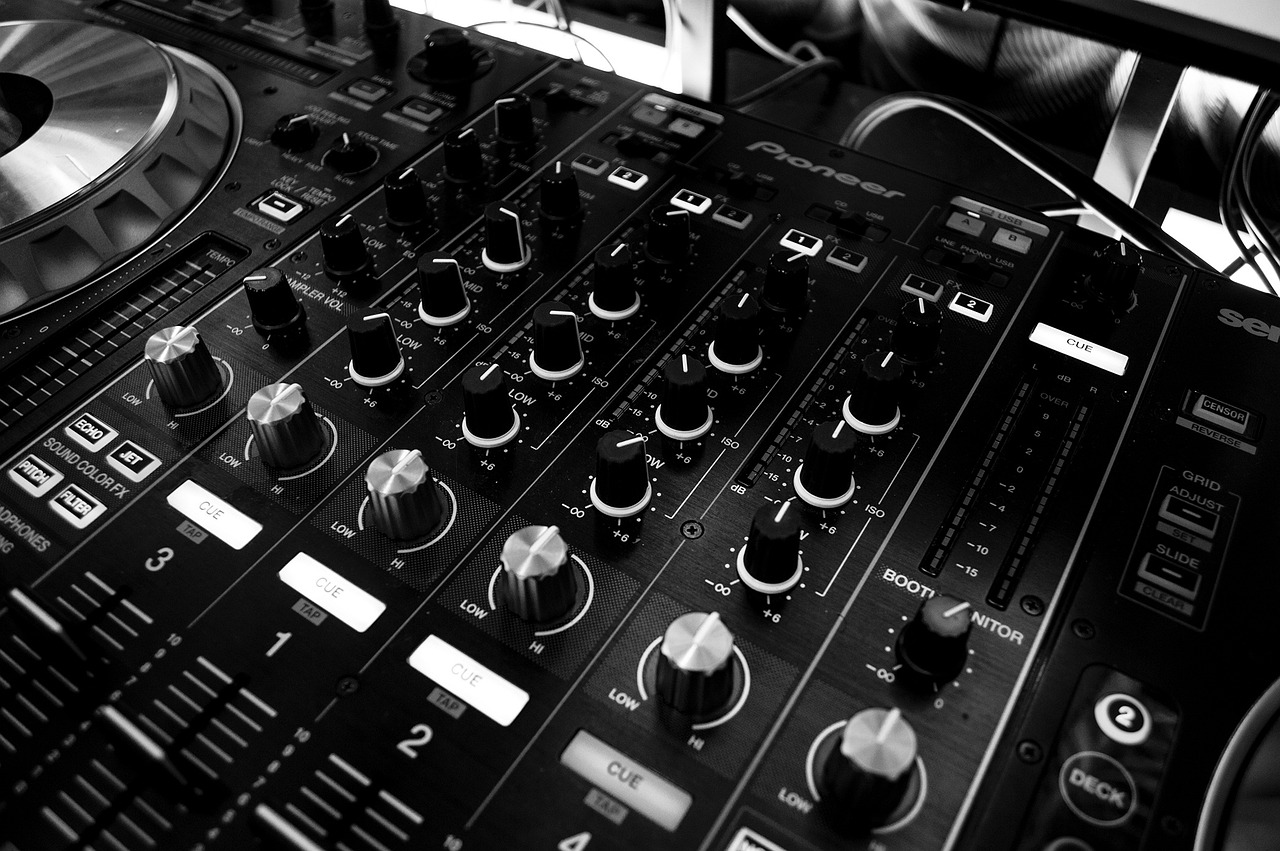
Image obtained from Pixabay.

Recently, I had the opportunity to speak with the students at Berry College in Rome, Georgia about performing music for brass and electronics. The presentation was part of a recital tour to Georgia, including visits to Dalton State College and Berry College. Unfortunately, the tour had to be cut short because of the arrival of hurricane Helene, which has impacted millions of people across the Southeast. I’m so grateful to my host, Dr. Ellie Jenkins, for the opportunity to visit. The material from the class handout can be found below, and a printable copy can be viewed and downloaded here.

Finding and Choosing Repertoire

  • Theses, Dissertations, Journal articles relevant to your area
  • Attend conferences, new music festivals, etc.
  • Internet, YouTube, Naxos Music Library, Social Media
  • Commissioning, consortia, etc.
  • Considerations:
    • Is the media fixed, or does it respond in live performance? Ex. Delay, distortion, loops, etc. 
    • If the work or works require additional equipment to perform,  how easy is it to obtain, given one’s budget, access, and other factors?

Equipment

  • Can vary depending on the performance venue. Use in house equipment, or bring your own? Advantages and disadvantages to both. 
  • Minimum equipment if you wish to use your own:
    • Portable speaker, bluetooth or wired, choose based on your needs and budget. Brands I have used and can recommend: Rockville, JBL, Bose, Ultimate Ears
    • Laptop, phone, or tablet
  • Optional Equipment, depending on repertoire:
    • Audio interface 
    • Silent Brass, for routing audio signal through effects pedals
    • Condenser and/or dynamic microphones, as needed
    • Individual effect pedals: delay, distortion, etc.
    • Effects software for live performing: I use Apple’s Mainstage
    • Video projector
    • Preamps, mixers to adjust balance of multiple inputs
    • Headphones, onstage monitor, if necessary to align with fixed media
    • Cables, power cords, extension cords, surge protectors, batteries for all of the above.

Preparation

  • Practice the work without the electronics, fixed or otherwise, until comfortable. This will avoid compounding the musical challenges of your part with navigating the technology. If fixed media, aim for the tempo markings in the piece. Tempo can be adjusted to some extent on fixed media tracks using software, but it can distort the audio (unless it’s MIDI, in which case you can change the tempo, key, etc. as much as you want).
  • When putting your part together with fixed media, make note of time codes for major sections and subsections so you can practice just those passages without having to start the track at the beginning every time. 

Performance Considerations

  • Balance between electronics and live (or amplified) sound. Consider speaker placement, if using portable speakers. Performer can move up or down stage as well if necessary for different works.
  • Distortion can occur at high playback levels, so soundcheck these using the performance equipment, if possible. 
  • As with all live performance, the acoustics and overall feel will be different onstage versus your practice room. 
  • If using multiple pieces of equipment, a piano bench or small table is helpful in making sure everything is laid out and accessible in an orderly way. Watch out for your cords!
  • Mute stands, shelves, etc. that attach to your stand can be helpful.
  • Consider the layout and setup of your program, and what’s necessary to transition from one work to the next. Percussionists think about this all the time, but brass players not so much.
  • Turn all levels to zero and turn off all components every time.  Plug in components first, then power on, then adjust levels. Avoid hot plugging. 
  • Relax and have fun sharing this repertoire!